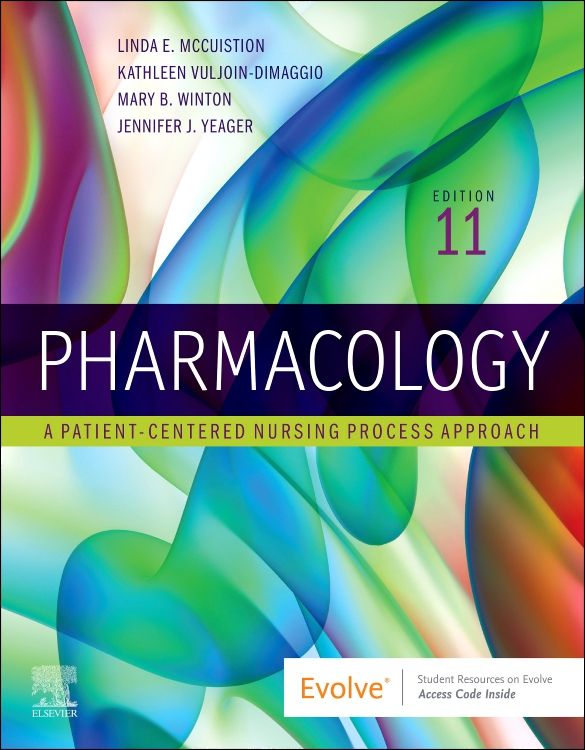
Pharmacology: A Patient-Centered Nursing Process Approach (11th Edition) Test Bank
$18.99
Bridge the Gap Between Pharmacologic Theory and Patient-Centered Care.
Ace your pharmacology course and prepare for the NGN with the official-style test bank for the 11th Edition of McCuistion’s Pharmacology: A Patient-Centered Nursing Process Approach. This 371-page comprehensive resource is updated for 2026 to ensure you master clinical judgment and safe medication administration.
- ISBN-13: 9780323793155
- Authors: Linda E. McCuistion, Kathleen Vuljoin DiMaggio, Mary B. Winton, Jennifer J. Yeager
- Content: All 55 Chapters (Introduction to Emergency Drugs)
- Features: Answer Keys + Detailed Clinical Rationales for Every Question
- Format: Instant, Searchable PDF Download
Essential for students mastering pharmacokinetics, dosage calculations, and system-specific drug therapies.
- SSL Encrypted & Secure Checkout
- Instant PDF Download (Searchable)
- Lifetime Access & 2026 Updates
Full Description
Table of Contents
Student Reviews
The Ultimate Study Companion for McCuistion’s Pharmacology 11th Edition
Pharmacology is often cited as the most challenging course in nursing school. The Pharmacology: A Patient-Centered Nursing Process Approach 11th Edition Test Bank is designed to help you simplify complex drug classifications and master the nursing process. This 371-page study aid mirrors the McCuistion textbook’s unique focus on patient-centered care, ensuring you are prepared for midterms, finals, and high-stakes licensure exams.Comprehensive Coverage Across 18 Core Units
This test bank provides rigorous practice questions for every stage of your pharmacology curriculum, covering all 55 chapters:- Foundational Principles: Master pharmacokinetics, pharmacodynamics, and pharmacogenetics.
- Dosage & Administration: targeted practice for drug calculations and safe administration techniques.
- Autonomic & Central Nervous Systems: In-depth questions on adrenergics, stimulants, anticonvulsants, and drugs for Alzheimer’s.
- System-Specific Therapy: Expert-level practice for Cardiovascular, Respiratory, GI, and Endocrine drugs.
- Specialized Pharmacology: Critical practice for HIV/AIDS related drugs, antineoplastics, and reproductive health.
Designed for NGN Success and Medication Safety
In 2026, nursing excellence is defined by Clinical Judgment. Our test bank provides detailed rationales that explain the why behind side effects, contraindications, and nursing interventions. This approach is vital for passing the Next-Generation NCLEX (NGN), helping you identify cues and prioritize patient safety in complex pharmacologic scenarios.Instant Academic Access & Searchable PDF
Your order grants you immediate access to a high-quality PDF. Use the CTRL+F function to quickly find specific drug classes like “Antihypertensives,” “Antidiabetics,” or “Antimicrobials” in seconds.Strategic Learning for 2026 Nursing Students
This resource covers all 55 chapters listed in the table of contents, focusing on high-priority clinical topics:- Chapter 1: The Nursing Process and Patient-Centered Care
- Chapter 11: Drug Calculations (Master your dosage exams)
- Chapter 26: Antibacterials (A top-tested antimicrobial category)
- Chapter 39: Antihypertensives (Crucial for med-surg and cardiac exams)
- Chapter 55: Adult and Pediatric Emergency Drugs
Frequently Asked Questions
Is this the 11th Edition by McCuistion?
Yes, this test bank is specifically aligned with the 11th Edition (ISBN: 9780323793155) published by Elsevier.
Are answers and clinical rationales included?
Absolutely. Every question features a complete answer key and comprehensive clinical rationales to reinforce your pharmacologic knowledge.
How is the file delivered?
The download link is delivered to your email instantly after a secure checkout, allowing you to start your pharmacology prep immediately.
Unit 1: Introduction to Pharmacology
1. The Nursing Process and Patient-Centered Care
2. Drug Development and Ethical Considerations
3. Pharmacokinetics and Pharmacodynamics
4. Pharmacogenetics
5. Complementary and Alternative Therapies
6. Pediatric Considerations
7. Geriatric Considerations
8. Drugs in Substance Use Disorder
Unit 2: Pharmacotherapy and Drug Administration
9. Safety and Quality
10. Drug Administration
11. Drug Calculations
Unit 3: Maintenance of Homeostasis
12. Fluid Volume and Electrolytes
13. Vitamin and Mineral Replacement
14. Nutritional Support
Unit 4: Autonomic Nervous System Drugs
15. Adrenergic Agonists and Antagonists
16. Cholinergic Agonists and Antagonists
Unit 5: Central and Peripheral Nervous System Drugs
17. Stimulants
18. Depressants
19. Antiseizure Drugs
20. Drugs for Parkinsonism and Alzheimer’s Disease
21. Drugs for Neuromuscular Disorders and Muscle Spasms
Unit 6: Mental and Behavioral Health Drugs
22. Antipsychotics and Anxiolytics
23. Antidepressants and Mood Stabilizers
Unit 7: Pain and Inflammation Management Drugs
24. Antiinflammatories
25. Analgesics
Unit 8: Antimicrobial Drugs
26. Antibacterials
27. Antituberculars, Antifungals, and Antivirals
28. Antimalarials, Anthelmintics, and Peptides
Unit 9: Immunologic Drugs
29. HIV- and AIDS-Related Drugs
30. Transplant Drugs
31. Vaccines
Unit 10: Antineoplastics and Biologic Response Modifiers
32. Anticancer Drugs
33. Targeted Therapies to Treat Cancer
34. Biologic Response Modifiers
Unit 11: Respiratory Drugs
35. Upper Respiratory Disorders
36. Lower Respiratory Disorders
Unit 12: Cardiovascular Drugs
37. Cardiac Glycosides, Antianginals, and Antidysrhythmics
38. Diuretics
39. Antihypertensives
40. Anticoagulants, Antiplatelets, and Thrombolytics
41. Antihyperlipidemics and Drugs to Improve Peripheral Blood Flow
Unit 13: Gastrointestinal Drugs
42. Gastrointestinal Tract Disorders
43. Antiulcer Drugs
Unit 14: Eye, Ear, and Skin Drugs
44. Eye and Ear Disorders
45. Dermatologic Disorders
Unit 15: Endocrine Drugs
46. Pituitary, Thyroid, Parathyroid, and Adrenal Disorders
47. Antidiabetics
Unit 16: Renal and Urologic Drugs
48. Urinary Disorders
Unit 17: Reproductive and Gender-Related Drugs
49. Pregnancy and Preterm Labor
50. Labor, Delivery, and Postpartum
51. Neonatal and Newborn
52. Reproductive Health
53. Men’s Health and Reproductive Disorders
54. Sexually Transmitted Infections
Unit 18: Sexually Transmitted Infections
55. Adult and Pediatric Emergency Drugs
Review type for post source and product source type not found
Nursing Students Also Studied
Leadership Roles and Management Functions in Nursing: Theory and Application, 12th Edition Test Bank by Carol J. Huston
$26.99
Davis Advantage for Townsend’s Essentials of Psychiatric Mental Health Nursing, 10th Edition Test Bank by Morgan
$26.99
Brunner & Suddarth’s Textbook of Medical-Surgical Nursing 16th Edition Test Bank
$26.99

Introduction to Clinical Pharmacology 11th Edition Test Bank by Visovsky, Zambroski & Hosler
$23.99