
How to Match Your Nursing Textbook Edition Before You Buy Study Materials
Nursing programs usually assign a specific edition of a textbook, and many popular titles are revised every few years. A
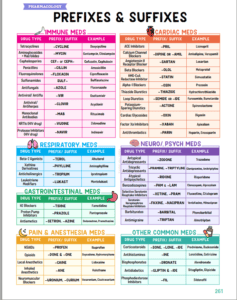
Memorising hundreds of individual generic and brand-name medications for nursing school and the Next Generation NCLEX (NGN) can feel overwhelming. The secret used by top-scoring nursing students isn’t memorising every single drug individually—it is recognising drug stems (prefixes, infixes, and suffixes).
By learning medication stems, you can immediately identify a drug’s therapeutic class, mechanism of action, primary side effects, and essential nursing interventions just by looking at its generic name.
Below is your complete, system-by-system cheat sheet for pharmacology prefixes and suffixes, packed with high-yield NCLEX clinical pearls.
Cardiovascular drugs are among the most frequently tested topics on the NCLEX. Examiners love testing baseline assessments (blood pressure, apical pulse) and critical electrolyte imbalances.
| Drug Class | Prefix / Suffix | Common Generic Examples | Key Nursing Considerations & NCLEX Tips |
| ACE Inhibitors | -pril | Lisinopril, Enalapril, Ramipril, Captopril | • Watch for dry nonproductive cough (switch to ARB) and angioedema (airway priority). • Risk of hyperkalemia; monitor K⁺ levels and renal function. |
| Angiotensin II Receptor Blockers (ARBs) | -sartan | Losartan, Valsartan, Candesartan | • Alternative for patients who develop a cough on ACE inhibitors. • Avoid in pregnancy; monitor blood pressure and potassium. |
| Beta-Blockers | -olol | Metoprolol, Atenolol, Propranolol, Carvedilol | • Hold if HR < 60 bpm or SBP < 100 mmHg. • Non-selective beta-blockers (e.g., Propranolol) are contraindicated in asthma/COPD (causes bronchospasms). • Can mask signs of hypoglycemia (except diaphoresis). |
| Calcium Channel Blockers (CCBs) | -dipine, -amil, -zem | Amlodipine, Nifedipine, Verapamil, Diltiazem | • Decreases BP and HR (Verapamil/Diltiazem). • Watch for peripheral edema, dizziness, and constipation. • Avoid grapefruit juice. |
| HMG-CoA Reductase Inhibitors (Statins) | -statin | Atorvastatin, Simvastatin, Rosuvastatin | • Lowers LDL and triglycerides. • Monitor liver enzymes (AST/ALT) and assess for unexplained muscle aches/pains (rhabdomyolysis). • Timing depends on the drug: simvastatin is labelled for evening dosing, while atorvastatin and rosuvastatin can be taken at any time of day. |
| Alpha-1 Blockers | -osin | Prazosin, Doxazosin, Tamsulosin | • Relaxes vascular smooth muscle and bladder neck (used for hypertension & BPH). • Teach patients about orthostatic hypotension and fall precautions. |
| Loop Diuretics | -semide, -ide | Furosemide, Torsemide, Bumetanide | • Potent potassium-wasting diuretics. • Monitor for hypokalemia, dehydration, and ototoxicity if IV push is given too rapidly. |
| Thiazide Diuretics | -thiazide | Hydrochlorothiazide, Chlorothiazide | • First-line for mild HTN. • Potassium-wasting; monitor electrolytes, blood glucose, and uric acid levels. |
| Potassium-Sparing Diuretics | -actone | Spironolactone, Eplerenone | • Blocks aldosterone. • Retains potassium; avoid salt substitutes (which contain high potassium). |
| Anticoagulants / Antithrombotics | -parin | Heparin, Enoxaparin (LMWH) | • Monitor aPTT for unfractionated Heparin; antidote is Protamine Sulfate. • Monitor platelets for Heparin-Induced Thrombocytopenia (HIT). |
| Direct Factor Xa Inhibitors | -xaban | Apixaban, Rivaroxaban, Edoxaban | • Direct oral anticoagulants (DOACs). • Routine blood monitoring (PT/INR) is not required; educate on bleeding precautions. |
| Cardiac Glycosides | -oxin | Digoxin, Digitoxin | • Increases myocardial contractility and slows heart rate. • Hold if apical pulse < 60 bpm. • Narrow therapeutic window (0.5–2.0 ng/mL). Hypokalemia increases toxicity risk; signs include visual halos (yellow/green), nausea, and vomiting. |
Antibiotic stewardship, allergy cross-reactivity, and organ toxicities are core NCLEX testing points.
| Drug Class | Prefix / Suffix | Common Generic Examples | Key Nursing Considerations & NCLEX Tips |
| Penicillins | -cillin | Amoxicillin, Ampicillin, Piperacillin | • High risk of severe allergic reaction/ anaphylaxis. • Cross-sensitivity with Cephalosporins (ask about the exact type of allergic reaction before administration). |
| Cephalosporins | cef-, ceph- | Cefazolin, Ceftriaxone, Cephalexin | • 5 generations of broad-spectrum coverage. • Alcohol: a disulfiram-like reaction is a labelled warning for some cephalosporins, such as cefotetan (avoid alcohol during therapy and for 72 hours afterwards). It is not a warning for every cephalosporin, so check the specific drug’s label. |
| Tetracyclines | -cycline | Doxycycline, Minocycline, Tetracycline | • Do NOT give to pregnant women or children under 8 (causes permanent tooth discoloration and impaired bone growth). • Causes severe photosensitivity; do not take with dairy, iron, or antacids. |
| Aminoglycosides & Macrolides | -mycin, -micin | Gentamicin, Tobramycin (Aminoglycosides); Azithromycin, Erythromycin (Macrolides) | • Aminoglycosides: High risk for ototoxicity (tinnitus, hearing loss) and nephrotoxicity (monitor BUN/Creatinine & peak/trough levels). • Macrolides: Watch for prolonged QT intervals and hepatotoxicity. |
| Fluoroquinolones | -floxacin | Ciprofloxacin, Levofloxacin, Moxifloxacin | • Black Box Warning: Risk of tendonitis and tendon rupture (especially the Achilles tendon). • Avoid dairy/calcium during administration; increase fluid intake to prevent crystalluria. |
| Sulfonamides | sulf- | Sulfamethoxazole, Sulfadiazine, Sulfasalazine | • Common trigger for Stevens-Johnson syndrome (SJS). • High risk of photosensitivity and crystalluria (encourage 2–3L fluids/day). |
| Antifungals | -azole | Fluconazole, Ketoconazole, Itraconazole | • Used for candidiasis, fungal infections. • Major CYP450 inhibitors (many drug interactions); monitor liver function tests. |
| Antivirals | -vir, -clovir | Acyclovir, Valacyclovir, Oseltamivir | • Effective for HSV, VZV, and Influenza. • Start as early as possible; the window depends on the drug and indication. Examples: oseltamivir for influenza within 48 hours of symptom onset; valacyclovir for shingles is most effective within 48 hours of rash onset (efficacy not established when started more than 72 hours after). |
| Monoclonal Antibodies | -mab | Rituximab, Trastuzumab, Adalimumab | • Immunosuppressive biologic agents. • Pre-screen for latent Tuberculosis (TB) before starting; monitor closely for infusion reactions. |
| Protease Inhibitors (HIV) | -navir | Ritonavir, Atazanavir, Darunavir | • Part of combination antiretroviral therapy (cART). • Can cause metabolic syndrome, hyperglycemia, and hyperlipidemia. |
| NRTIs (HIV) | -vudine | Zidovudine, Lamivudine | • Prevents viral replication. • Monitor complete blood counts (bone marrow suppression/anemia). |
| Drug Class | Prefix / Suffix | Common Generic Examples | Key Nursing Considerations & NCLEX Tips |
| Beta-2 Agonists (Bronchodilators) | -terol | Albuterol (short-acting, SABA), Salmeterol (long-acting, LABA) | • Albuterol is the rescue inhaler of choice for acute asthma attacks. • Side effects: Tachycardia, tremors, palpitations. • If taking with an inhaled corticosteroid, use the bronchodilator FIRST, wait 5 minutes, then use the steroid. |
| Anticholinergics | -tropium | Ipratropium, Tiotropium | • Blocks acetylcholine, causing bronchodilation. • Dries secretions (anticholinergic effects: dry mouth, urinary retention). |
| Xanthine Derivatives | -phylline | Theophylline, Aminophylline | • Bronchodilator with a narrow therapeutic range (10–20 mcg/mL). • Toxicity presents with tachycardia, arrhythmias, and seizures. Avoid caffeine. |
| Leukotriene Modifiers | -lukast | Montelukast, Zafirlukast | • Maintenance therapy for chronic asthma and allergic rhinitis (NOT for acute asthma attacks). • Take daily in the evening. |
Psychiatric pharmacology is heavily tested with focus on therapeutic windows, black box warnings, and adverse reactions (e.g., Serotonin Syndrome, Neuroleptic Malignant Syndrome).
| Drug Class | Prefix / Suffix | Common Generic Examples | Key Nursing Considerations & NCLEX Tips |
| Benzodiazepines | -pam, -lam | Diazepam, Lorazepam, Alprazolam, Clonazepam | • CNS depressants for acute anxiety and seizures. • High risk for dependence and sedation; avoid alcohol. • Antidote: Flumazenil. |
| Selective Serotonin Reuptake Inhibitors (SSRIs) | -xetine, -pram | Fluoxetine, Paroxetine, Citalopram, Escitalopram | • Caution: the -xetine ending is not unique to SSRIs. Duloxetine is an SNRI (see below).• First-line for depression/anxiety; takes 2–4 weeks for therapeutic effect. • Watch for Serotonin Syndrome (fever, rigidity, agitation, hyperreflexia). • Black box warning: Increased suicidal ideation in young adults during initial therapy. |
| SNRIs | -faxine, -nacipran | Venlafaxine, Duloxetine, Milnacipran | • Duloxetine is an SNRI even though its name ends in -xetine, like the SSRIs fluoxetine and paroxetine.• Used for depression and diabetic neuropathic pain. • Monitor blood pressure (norepinephrine reuptake increases BP). |
| Tricyclic Antidepressants (TCAs) | -pramine, -triptyline | Amitriptyline, Nortriptyline, Clomipramine | • Older antidepressants; strong anticholinergic side effects (can’t see, can’t pee, can’t spit, can’t defecate). • High risk of fatal cardiac arrhythmias in overdose. |
| Atypical Antipsychotics | -ridone, -apine | Risperidone, Paliperidone, Olanzapine, Clozapine | • Used for schizophrenia and bipolar disorder. • Lower risk of Extrapyramidal Symptoms (EPS), but causes metabolic syndrome and weight gain. • Clozapine special note: Severe risk of agranulocytosis; monitor absolute neutrophil count (ANC) weekly. |
| Barbiturates | -barbital | Phenobarbital, Pentobarbital | • CNS depressants / sedatives. • High overdose potential with severe respiratory depression; no direct antidote. |
| Antimigraine (Triptans) | -triptan | Sumatriptan, Zolmitriptan | • Constricts cranial blood vessels to abort acute migraines. • Contraindicated in coronary artery disease (CAD) or uncontrolled HTN due to vasoconstriction. |
| Drug Class | Prefix / Suffix | Common Generic Examples | Key Nursing Considerations & NCLEX Tips |
| Proton Pump Inhibitors (PPIs) | -prazole | Omeprazole, Pantoprazole, Lansoprazole | • Suppresses gastric acid secretion for GERD and peptic ulcers. • Long-term risks: Osteoporosis (decreased calcium absorption/fractures), C. difficile infection, and hypomagnesemia. • Take 30 minutes before breakfast. |
| H2 Receptor Blockers | -tidine | Famotidine, Cimetidine | • Reduces stomach acid production. • Take 30–60 minutes before meals. • Ranitidine also carries the -tidine stem, but in April 2020 the US FDA requested removal of all ranitidine products from the US market (NDMA contamination). Availability in other countries depends on the local regulator. |
| Antiemetics (5-HT3 Antagonists) | -setron | Ondansetron, Granisetron | • Prevents chemotherapy-induced and postoperative nausea. • Can cause headache, dizziness, and prolonged QT interval. |
| Drug Class | Prefix / Suffix | Common Generic Examples | Key Nursing Considerations & NCLEX Tips |
| NSAIDs | -profen, -fenac | Ibuprofen, Ketoprofen, Diclofenac | • Inhibit prostaglandin synthesis (analgesic, anti-inflammatory, antipyretic). • Adverse effects: GI bleeding/ulcers and nephrotoxicity. • Take with food; avoid in heart failure and advanced kidney disease. |
| Opioid Analgesics | -done, -one | Oxycodone, Methadone, Hydromorphone, Morphine | • Severe pain management. • Critical priority: Respiratory depression (hold if RR < 12/min). • Causes constipation and sedation. Antidote: Naloxone (Narcan). |
| Local Anesthetics | -caine | Lidocaine, Bupivacaine, Mepivacaine | • Blocks sodium channels to stop nerve conduction. • Systemic toxicity signs (LAST): Perioral numbness, metallic taste, tremors, seizures. |
| Inhaled Anesthetics | -ane | Halothane, Isoflurane, Sevoflurane | • General anesthesia agents. • Trigger for Malignant Hyperthermia (muscle rigidity + extreme hyperthermia). Antidote: Dantrolene. |
| Neuromuscular Blockers | -uronium, -curium | Vecuronium, Rocuronium, Cisatracurium | • Causes skeletal muscle paralysis for intubation/surgery. • Does NOT provide sedation or analgesia; the patient must always receive sedation first. |
| Drug Class | Prefix / Suffix | Common Generic Examples | Key Nursing Considerations & NCLEX Tips |
| Corticosteroids | -sone, -lone, -ide | Prednisone, Dexamethasone, Methylprednisolone | • Anti-inflammatory and immunosuppressive. • Causes hyperglycemia, osteoporosis, delayed wound healing, peptic ulcers, and weight gain. • Never stop abruptly (taper down to avoid acute adrenal crisis). |
| Oral Antidiabetics | -gliptin, -ide | Sitagliptin (DPP-4), Glipizide, Glimepiride (Sulfonylureas) | • Sulfonylureas (-ide) carry a high risk of hypoglycemia.• Teach patients hypoglycemia signs (shakiness, diaphoresis, confusion) and rule of 15s. |
| Bisphosphonates | -dronate | Alendronate, Risedronate, Ibandronate | • Treats and prevents osteoporosis. • Must be taken first thing in the morning with a full glass of water, on an empty stomach. • Patient must remain upright for at least 30 minutes to prevent severe esophagitis. |
| PDE-5 Inhibitors | -fil | Sildenafil, Tadalafil | • Used for erectile dysfunction and pulmonary arterial hypertension. • ABSOLUTELY CONTRAINDICATED with Nitroglycerin/Nitrates due to fatal hypotension. |
When answering NextGen NCLEX pharmacology questions, apply these standard clinical rules:
This sheet is a study aid for nursing students. For dosing and safety decisions, the current prescribing information for the specific drug and your local protocols take precedence.
Nursing programs usually assign a specific edition of a textbook, and many popular titles are revised every few years. A
What Is ADHD? Attention-deficit/hyperactivity disorder, commonly called ADHD, is a neurodevelopmental disorder involving persistent difficulties with attention, impulse control, activity
What Is a Mental State Examination? A Mental State Examination (MSE) is a structured clinical assessment used to evaluate a