
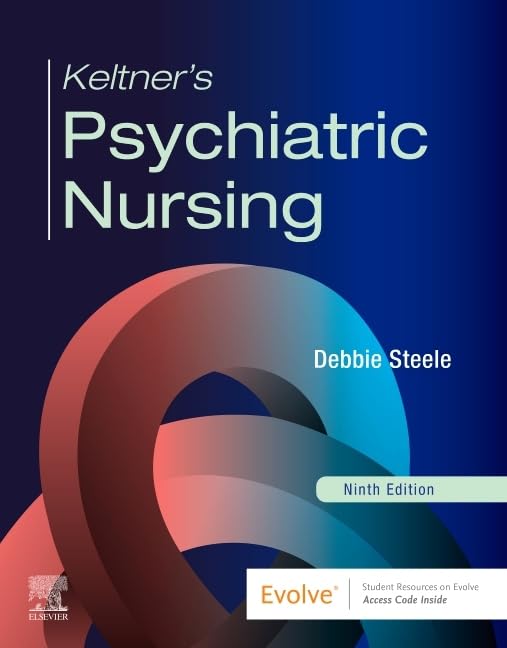
Keltner’s Psychiatric Nursing 9th Edition Test Bank (Steele)
$18.99
Psychiatric nursing exams require intense critical thinking. Instantly download the complete Keltner’s Psychiatric Nursing 9th Edition Test Bank by Debbie Steele (ISBN: 9780323791960). maximise your study time with the exact practice questions, correct answers, and detailed rationales, all tailored to the “Me, Meds, Milieu” approach of your textbook.
- Instant Digital Delivery: Get your 300-page PDF download immediately after secure checkout.
- 100% Complete: Includes comprehensive test questions for all 36 chapters and 6 units.
- Detailed Rationales: Build clinical judgment by understanding exactly why every answer is correct or incorrect.
- NCLEX-Ready: Practice with alternate-format and Next-Generation NCLEX (NGN) style questions.
- SSL Encrypted & Secure Checkout
- Instant PDF Download (Searchable)
- Lifetime Access & 2026 Updates
Full Description
Table of Contents
Student Reviews
Pass Your Mental Health Exams with Keltner’s 9th Edition Test Bank
Psychiatric nursing is uniquely challenging because it focuses heavily on therapeutic communication, complex psychopharmacology, and environmental management. The Keltner’s Psychiatric Nursing 9th Edition Test Bank (ISBN: 9780323791960) is the ultimate study companion designed to help you master these concepts and pass your course with ease. Written to align perfectly with the 9th edition textbook by Debbie Steele, this 300-page digital test bank provides hundreds of practice questions that mirror the actual exams you will face in your nursing program, focusing directly on the book’s core philosophy of Me, Meds, and Milieu.What is inside this Test Bank?
- Comprehensive Rationales: Every question includes a detailed rationale explaining the correct answer and why the distractors are wrong.
- Cognitive Level Mapping: Questions are categorised by difficulty (Application, Analysis, etc.) to help you build critical thinking skills.
- Psychopharmacology Focus: Deep dive into the “Meds” component with extensive questions on antipsychotics, antidepressants, and antianxiety drugs.
- Next-Gen NCLEX (NGN) Ready: Familiarise yourself with the exact formatting and alternate-item questions you will see on your licensure exams.
Complete Table of Contents Covered (Chapters 1 – 36):
Your instant PDF download includes test questions for all 6 units of the textbook: UNIT I. The Basics- 1. Me, Meds, Milieu
- 2. Historical Issues
- 3. Legal Issues
- 4. Psychobiologic Bases of Behavior
- 5. Cultural Issues
- 6. Spirituality Issues
- 7. Models for Working With Psychiatric Patients
- 8. Learning to Communicate Professionally
- 9. Working With an Individual Patient
- 10. Working With Groups of Patients
- 11. Working With the Family
- 12. Introduction to Psychotropic Drugs
- 13. Antiparkinsonian Drugs
- 14. Antipsychotic Drugs
- 15. Antidepressant Drugs
- 16. Antimanic Drugs
- 17. Antianxiety Drugs
- 18. Antidementia Drugs
- 19. Alternative Preparations and Over-the-Counter Drugs
- 20. Introduction to Milieu Management
- 21. Variables Affecting the Therapeutic Environment: Violence and Suicide
- 22. Therapeutic Environment in Various Treatment Settings
- 23. Introduction to Psychopathology
- 24. Schizophrenia Spectrum and Other Psychotic Disorders
- 25. Depressive Disorders
- 26. Bipolar Disorders
- 27. Anxiety-Related, Obsessive-Compulsive, Trauma and Stressor-Related, Somatic, and Dissociative Disorders
- 28. Neurocognitive Disorders
- 29. Personality Disorders
- 30. Sexual Disorders and Gender Dysphoria
- 31. Substance Use Disorders
- 32. Eating Disorders
- 33. Survivors of Violence and Trauma
- 34. Children and Adolescents
- 35. Older Adults
- 36. Soldiers and Veterans
Frequently Bought Together:
Students who purchase this psychiatric nursing test bank often pair it with these highly recommended study resources to dominate their mental health rotations:- Varcarolis’ Foundations of Psychiatric-Mental Health Nursing 9th Edition Test Bank – Another top-tier resource for alternate mental health practice questions.
- Townsend’s Essentials of Psychiatric Mental Health Nursing, 9th Edition, Test Bank – Excellent secondary resource for mastering therapeutic communication.
- Psychiatric Mental Health Nursing 10th Edition Test Bank (Morgan/Townsend) – Expand your study base across the entire psychiatric nursing spectrum.
- Videbeck Psychiatric-Mental Health Nursing 9th Edition Test Bank – Highly recommended for understanding complex psychopathologies.
Frequently Asked Questions
Is this a physical book? No, this is a digital PDF test bank. You will not receive a physical textbook in the mail. Providing this as a digital download ensures you get your study materials instantly and can study anywhere, anytime! How do I download the file? Immediately after your payment is processed, you will be redirected to a secure download page. You will also receive an email with a download link. You can easily open and read the PDF on your smartphone, tablet, or computer.UNIT I. The Basics
1. Me, Meds, Milieu
2. Historical Issues
3. Legal Issues
4. Psychobiologic Bases of Behavior
5. Cultural Issues
6. Spirituality Issues
UNIT II. You (Therapeutic Nurse-Patient Relationship)
7. Models for Working With Psychiatric Patients
8. Learning to Communicate Professionally
9. Working With an Individual Patient
10. Working With Groups of Patients
11. Working With the Family
UNIT III. Medication (Psychopharmacology)
12. Introduction to Psychotropic Drugs
13. Antiparkinsonian Drugs
14. Antipsychotic Drugs
15. Antidepressant Drugs
16. Antimanic Drugs
17. Antianxiety Drugs
18. Antidementia Drugs
19. Alternative Preparations and Over-the-Counter Drugs
UNIT IV. Environment: Milieu Management
20. Introduction to Milieu Management
21. Variables Affecting the Therapeutic Environment: Violence and Suicide
22. Therapeutic Environment in Various Treatment Settings
UNIT V. Putting It All Together (Psychopathology)
23. Introduction to Psychopathology
24. Schizophrenia Spectrum and Other Psychotic Disorders
25. Depressive Disorders
26. Bipolar Disorders
27. Anxiety-Related, Obsessive-Compulsive, Trauma and Stressor-Related, Somatic, and Dissociative Disorders
28. Neurocognitive Disorders
29. Personality Disorders
30. Sexual Disorders and Gender Dysphoria
31. Substance Use Disorders
32. Eating Disorders
UNIT VI. Special Populations
33. Survivors of Violence and Trauma
34. Children and Adolescents
35. Older Adults
36. Soldiers and Veterans
Review type for post source and product source type not found
Nursing Students Also Studied

Stanhope and Lancaster's Community Health Nursing in Canada 4th Edition Test Bank (MacDonald/Jakubec)
$18.99
Test Bank for Physical Examination & Health Assessment, 4th Canadian Edition by Carolyn Jarvis
$18.99